
Sawi Mosque Multan The Mysterious Mughal-Era Heritage
Explore Sawi Mosque Multan, a unique Mughal-era mosque known for its turquoise tile work, historic graves, Persian inscriptions, and rich heritage.
Introduction
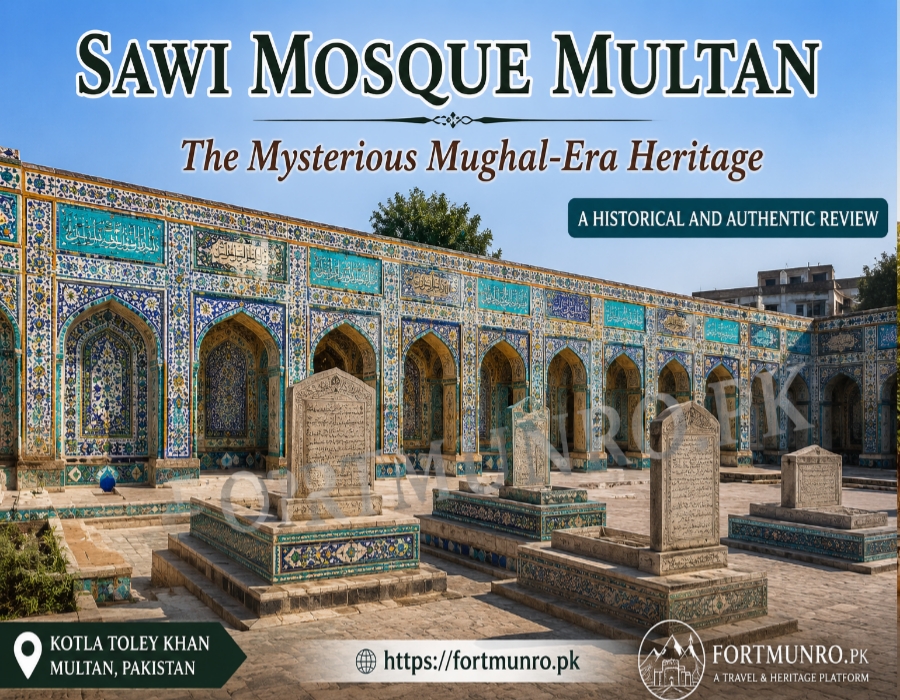
Sawi Mosque Multan is one of the most fascinating and historically significant religious monuments in the old city of Multan. Located in Kotla Toley Khan, this remarkable structure is famous for its turquoise tile work, ancient inscriptions, and unique architectural style that continues to attract researchers and heritage enthusiasts.
The history of Sawi Mosque Multan is surrounded by mystery, as different historical sources attribute its construction to various periods of the Mughal era. Despite these uncertainties, the mosque remains an important example of Multan’s rich artistic, cultural, and religious heritage.
Today, Sawi Mosque Multan stands as a symbol of Mughal craftsmanship, decorative tile artistry, and historical preservation. Its inscriptions, graves, and architectural features provide valuable insights into the region’s past and make it a significant heritage landmark.
Quick Answer
What is Sawi Mosque Multan?
Sawi Mosque Multan is a historic Mughal-era mosque located in Kotla Toley Khan, Multan. Known for its turquoise tile decoration, open-air Eidgah-style design, Persian inscriptions, and historic graves, it is considered one of the oldest and most unique heritage mosques in Multan.
Location of Sawi Mosque Multan
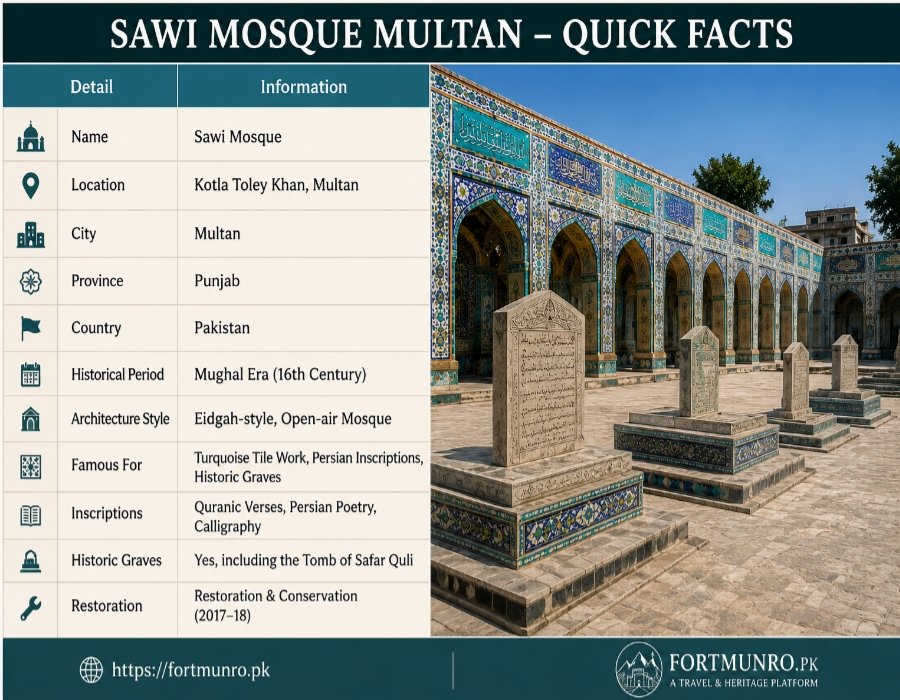
| Detail | Information |
|---|---|
| Name | Sawi Mosque |
| Location | Kotla Toley Khan, Multan |
| City | Multan |
| Province | Punjab |
| Country | Pakistan |
| Historical Period | Mughal Era |
| Famous For | Tile Work, Inscriptions, Historic Graves |
History of Sawi Mosque Multan
Origins and Historical Background
ساوی مسجد ملتان کے قدیم علاقے کوٹلہ تولے خان میں واقع ایک اہم تاریخی عبادت گاہ ہے۔ اس مسجد کی تعمیر کے حوالے سے مختلف آراء موجود ہیں، جس کی وجہ سے اس کی اصل تاریخ آج بھی تحقیق کا موضوع بنی ہوئی ہے۔
بعض محققین اس مسجد کو مغل شہنشاہ اکبر کے دور سے منسوب کرتے ہیں جبکہ بعض سرکاری بورڈز پر اس کی نسبت شاہجہان اور اورنگزیب کے زمانے سے جوڑی گئی ہے۔ یہی تاریخی اختلافات Sawi Mosque Multan کو مزید دلچسپ بناتے ہیں۔
Why Is It Called Sawi Mosque?
سرائیکی زبان میں “ساوی” کا مطلب سبز یا فیروزی رنگ ہے۔ مسجد کی دیواروں اور محرابوں پر موجود خوبصورت نیلی اور فیروزی کاشی کاری کی وجہ سے اسے ساوی مسجد کہا جاتا ہے۔
یہ کاشی کاری ملتان کی صدیوں پرانی فنکارانہ روایت کی عکاسی کرتی ہے اور اسی وجہ سے Sawi Mosque Multan شہر کے منفرد تاریخی ورثوں میں شمار ہوتی ہے۔
Unique Architecture of Sawi Mosque Multan
Eidgah-Style Open Structure
ساوی مسجد کی سب سے منفرد خصوصیت اس کا بغیر چھت والا ڈیزائن ہے۔ یہ مسجد روایتی گنبدوں اور چھتوں کے بجائے عیدگاہ طرز کی تعمیر پر مشتمل ہے۔
اس کے اندر بیس سے زائد محرابیں موجود ہیں جو اس کی خوبصورتی اور تاریخی اہمیت میں اضافہ کرتی ہیں۔ یہی طرز تعمیر Sawi Mosque Multan کو دیگر تاریخی مساجد سے ممتاز بناتا ہے۔
Decorative Tile Work and Calligraphy
مسجد کی دیواروں پر قرآنی آیات، فارسی اشعار اور نفیس خطاطی موجود ہے جو مغل دور کے فن تعمیر کی بہترین مثال پیش کرتی ہے۔
یہ کتبے نہ صرف مذہبی اہمیت رکھتے ہیں بلکہ ملتان کے قدیم خطاطوں اور فنکاروں کی مہارت کو بھی ظاہر کرتے ہیں۔ ان میں مولانا جامی اور شیخ ابوسعید ابوالخیر کے اشعار بھی شامل ہیں۔
Historic Graves Inside the Mosque
Important Tombs in the Courtyard
مسجد کے صحن میں متعدد تاریخی قبریں موجود ہیں جن میں سب سے نمایاں قبر صفر قلی کی ہے۔ ان کی وفات 10 شعبان 999 ہجری (1591ء) میں ہوئی تھی۔
قبر پر موجود تفصیلی فارسی کتبہ اس بات کی نشاندہی کرتا ہے کہ صفر قلی اپنے دور کی ایک اہم اور بااثر شخصیت تھے۔ یہ قبر آج بھی محققین کی توجہ کا مرکز ہے۔
Key Facts About the Graves
- صحن میں تین سے چار تاریخی قبریں موجود ہیں۔
- صفر قلی کی قبر مغربی جانب واقع ہے۔
- ایک دوسری اہم قبر مشرقی جانب موجود ہے۔
- شمال مشرقی کونے میں ایک الگ قبر بھی موجود ہے۔
- بعض قبروں کے بارے میں مقامی روایات موجود ہیں لیکن مستند شواہد محدود ہیں۔
Inscriptions and Historical Evidence
Notable Persian Inscriptions
صفر قلی کی قبر کے کتبے پر فارسی نستعلیق میں متعدد سطریں درج ہیں۔ ان تحریروں میں روحانیت، دنیا کی ناپائیداری اور ولایت کے موضوعات پر روشنی ڈالی گئی ہے۔
کتبے کے بعض حصوں میں حضرت امام جعفر صادقؑ کے اقوال بھی درج ہیں جو اس تاریخی یادگار کی علمی اور روحانی اہمیت کو بڑھاتے ہیں۔
Contributions of Local Artists
- استاد جیون ملتانی قدیم ملتان کے معروف خطاط تھے۔
- زکریا بن استاد محمد نے بعض کتبوں کی تیاری میں کردار ادا کیا۔
- فنکار خاندانوں نے مسجد کی آرائش میں حصہ لیا۔
- کاشی کاری اور خطاطی نے مسجد کو منفرد شناخت دی۔
یہ تمام شواہد اس بات کی طرف اشارہ کرتے ہیں کہ Sawi Mosque Multan صرف ایک عبادت گاہ نہیں بلکہ فنون لطیفہ کا ایک تاریخی مرکز بھی رہی ہے۔
Heritage Value and Conservation
Importance for Cultural Heritage
ساوی مسجد ملتان کی ثقافتی، مذہبی اور تاریخی شناخت کا ایک اہم حصہ ہے۔ یہ مسجد مغل دور کی تعمیراتی مہارت اور مقامی فنکارانہ روایات کی زندہ مثال ہے۔
اس کے کتبے، محرابیں، قبریں اور کاشی کاری اسے جنوبی پنجاب کے اہم ترین تاریخی مقامات میں شامل کرتے ہیں۔
Restoration and Preservation
2017-18 کے دوران مسجد کی مرمت اور بحالی کا کام کیا گیا، جس سے اس کے کئی حصوں کو محفوظ بنانے میں مدد ملی۔
اس کے باوجود Sawi Mosque Multan کو مزید تحقیقی توجہ، تحفظ اور مستقل دیکھ بھال کی ضرورت ہے تاکہ یہ تاریخی ورثہ آئندہ نسلوں تک محفوظ رہ سکے۔
Conclusion
Sawi Mosque Multan ملتان کی تاریخی شناخت، مغل دور کے فن تعمیر اور قدیم کاشی کاری کی ایک بے مثال یادگار ہے۔ اس مسجد کی منفرد ساخت اور تاریخی کتبے اسے خاص اہمیت دیتے ہیں۔
یہ مسجد نہ صرف ایک عبادت گاہ بلکہ ایک ایسا تاریخی مقام ہے جہاں مذہبی، ثقافتی اور فنی ورثہ ایک ساتھ نظر آتا ہے۔ اس کے صحن میں موجود قبریں اور فارسی تحریریں اس کی تاریخی اہمیت کو مزید نمایاں کرتی ہیں۔
آج بھی Sawi Mosque Multan محققین، سیاحوں اور تاریخ سے دلچسپی رکھنے والے افراد کے لیے ایک قیمتی ورثہ ہے۔ اس تاریخی مقام کا تحفظ مستقبل کی نسلوں کے لیے نہایت ضروری ہے۔
10 FAQs – Sawi Mosque Multan
1. What is Sawi Mosque Multan?
Sawi Mosque Multan is a historic Mughal-era mosque located in Kotla Toley Khan, Multan. It is famous for its turquoise tile work, Persian inscriptions, and unique open-air architectural design.
2. Where is Sawi Mosque located?
Sawi Mosque is situated in the historic neighborhood of Kotla Toley Khan in Multan, Punjab, Pakistan.
3. Why is it called Sawi Mosque?
The word “Sawi” means green or turquoise in the Saraiki language. The mosque received this name because of its beautiful turquoise-colored tile decoration.
4. When was Sawi Mosque built?
Most researchers believe the mosque dates back to the Mughal period, possibly during the reign of Emperor Akbar in the 16th century, although some sources associate it with the eras of Shah Jahan or Aurangzeb.
5. What makes Sawi Mosque unique?
Its roofless Eidgah-style structure, decorative tile work, Persian calligraphy, and historic graves make Sawi Mosque one of Multan’s most distinctive heritage sites.
6. Are there any historic graves inside the mosque?
Yes, several historic graves are located within the mosque courtyard, including the notable tomb of Safar Quli, who died in 1591 CE.
7. What languages are used in the mosque inscriptions?
The inscriptions mainly feature Persian text written in Nastaliq script, along with Quranic verses and poetic writings.
8. Who were the artists associated with Sawi Mosque?
Historical records mention renowned local craftsmen and calligraphers such as Ustad Jiwan Multani and Zakariya bin Ustad Muhammad.
9. Has Sawi Mosque been restored?
Yes, conservation and restoration work was carried out during 2017–18 to help preserve the mosque’s architectural and historical features.
10. Why is Sawi Mosque important for heritage tourism?
Sawi Mosque represents Multan’s rich Mughal-era architecture, traditional tile craftsmanship, and cultural history, making it an important destination for heritage enthusiasts and researchers.