
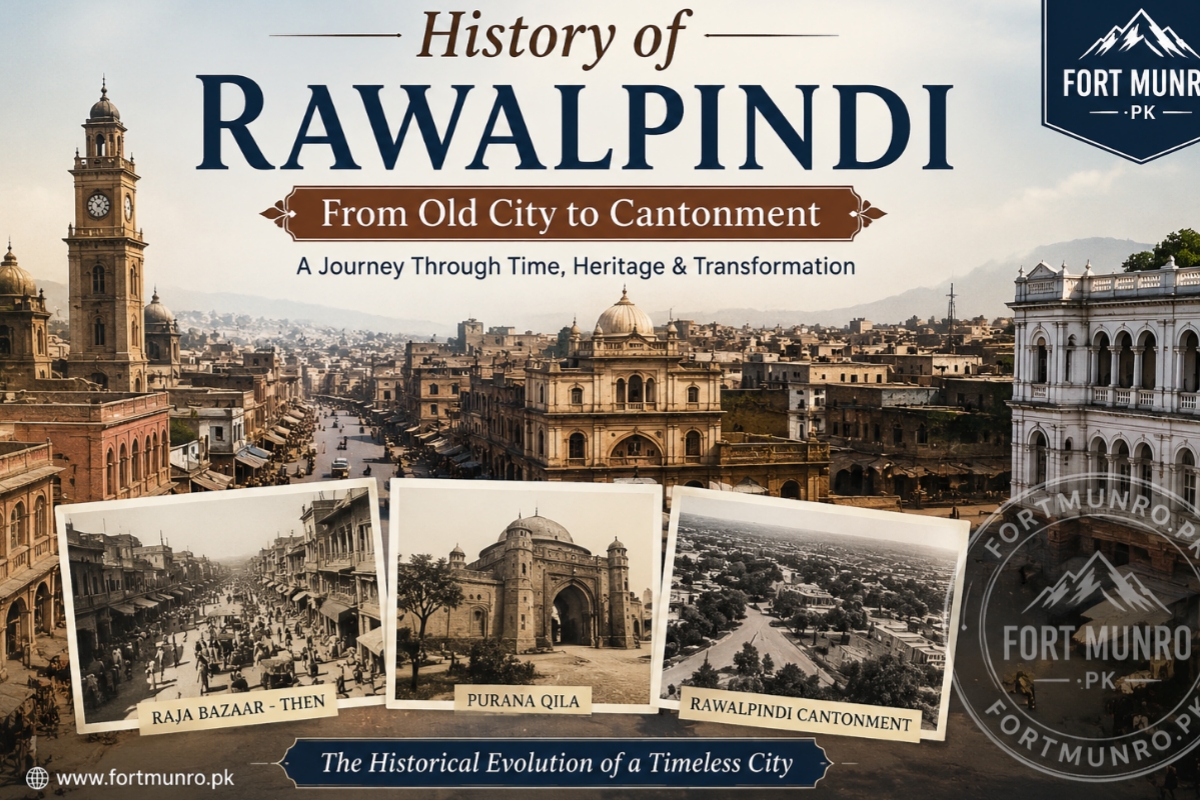
Explore the History of Rawalpindi, from Sikh and British eras to bustling markets, neighborhoods, and the growth of its famous cantonment.
History of Rawalpindi From Old City to Cantonment
Quick Answer
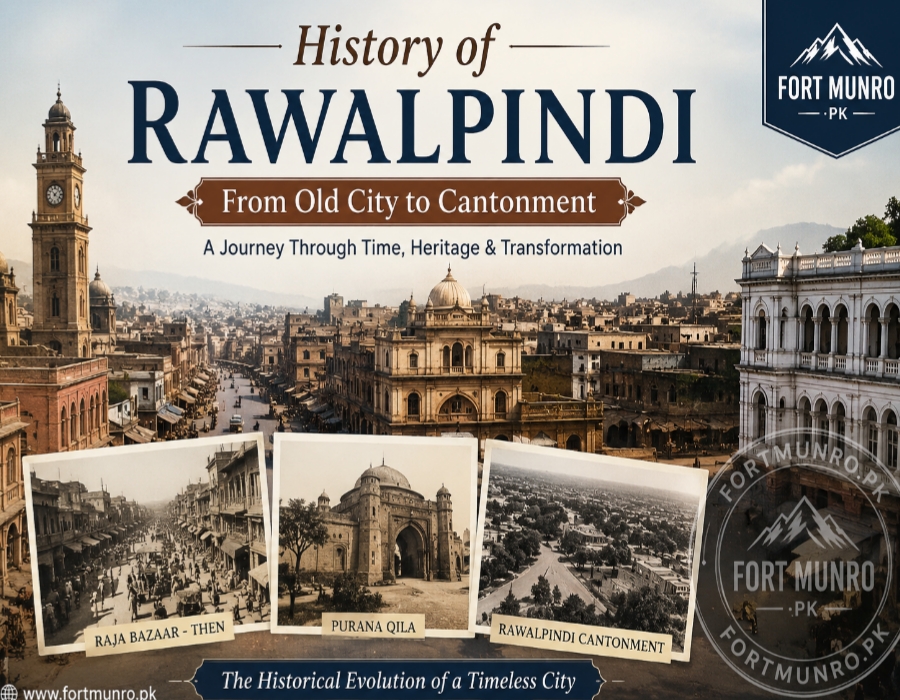
The History of Rawalpindi reflects a fascinating journey from a small settlement around Dingi Khoi and Purana Qila to a major urban center. Sikh rulers established important markets and neighborhoods, while the British expanded the city and cantonment, shaping modern Rawalpindi into one of Pakistan’s most significant cities.
Introduction
The History of Rawalpindi is a story of continuous growth, cultural diversity, and urban transformation. From its early days around Dingi Khoi and Purana Qila, the city gradually expanded under Sikh rule, giving rise to bustling markets, residential neighborhoods, and important public buildings.
During the Sikh and later British periods, the History of Rawalpindi witnessed remarkable changes in trade, education, and infrastructure. New bazaars, caravanserais, libraries, and community centers contributed to the city’s social and economic development.
Today, the History of Rawalpindi can still be traced through its old neighborhoods, historic markets, religious landmarks, and cantonment areas. These places preserve the legacy of generations who played a role in shaping the city’s identity.
Early Settlements in the History of Rawalpindi
Dingi Khoi and Purana Qila
راولپنڈی کی ابتدائی آبادی ڈنگی کھوئی اور پرانہ قلعہ کے گرد محدود تھی۔ یہ علاقہ شہر کے قدیم ترین حصوں میں شمار ہوتا ہے جہاں سے شہری زندگی کا آغاز ہوا۔
وقت کے ساتھ یہاں تجارتی سرگرمیاں بڑھیں اور مختلف خاندان آباد ہونے لگے۔ بعد میں آنے والے ادوار میں یہی علاقے شہر کی توسیع کی بنیاد بنے۔
Growth During the Sikh Era
سکھ دور میں راولپنڈی میں کئی نئی آبادیاں وجود میں آئیں جن میں کوچہ صابونیاں، بھابھڑا بازار، کسیرا بازار، محلہ امام باڑہ اور باغ سرداراں شامل تھے۔
باغ سرداراں کے ساتھ ایک گوردوارہ اور ایک بڑی لائبریری بھی قائم تھی جو اہل علم کے لیے اہم مرکز سمجھی جاتی تھی۔ بدقسمتی سے تقسیم ہند کے فسادات میں یہ تاریخی لائبریری تباہ ہوگئی۔
Historic Markets and Urban Expansion
Famous Bazaars of Rawalpindi
سکھ دور میں بانساں والا بازار،راجا بازار موچی بازار اور قصائی گلی جیسے مشہور تجارتی مراکز قائم ہوئے۔ یہ بازار شہر کی اقتصادی سرگرمیوں کا اہم حصہ تھے۔
قصائی گلی کا نام وہاں قائم گوشت کی دکانوں کی وجہ سے پڑا جبکہ بانساں والا بازار بانس کی بڑی منڈی کے باعث مشہور ہوا۔
Key Markets and Their Significance
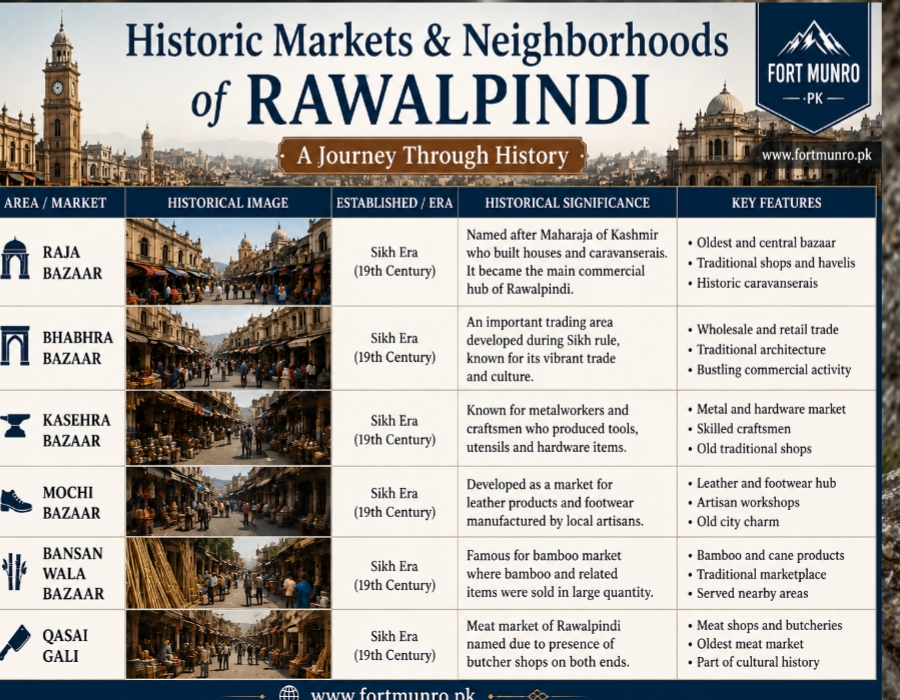
| Market Name | Historical Importance |
|---|---|
| Raja Bazaar | Major commercial center established during Sikh rule |
| Bhabhra Bazaar | Important trading district |
| Kasehra Bazaar | Traditional metalworking market |
| Mochi Bazaar | Known for craftsmen and traders |
| Bansan Wala Bazaar | Famous bamboo market |
| Qasai Gali | Historic meat market |
Important Neighborhoods in the History of Rawalpindi
Notable Localities
راولپنڈی میں وقت کے ساتھ مختلف محلے اور بستیاں وجود میں آئیں جنہوں نے شہر کی شناخت میں اہم کردار ادا کیا۔
چوہدری وارث خان، بنی، چھاچھی محلہ، رتہ امرال، چاہ سلطان اور فیروز پورہ جیسے علاقے شہر کی تاریخی ترقی کے اہم مراحل کی نمائندگی کرتے ہیں۔
Major Historical Areas
- Raja Bazaar
- Bagh Sardaran
- Mohalla Imam Bara
- Mohalla Chaudhry Waris Khan
- Bani
- Chachhi Mohalla
- Ratta Amral
- Qutbuddin Mohalla
یہ تمام علاقے مختلف ادوار میں آباد ہوئے اور آج بھی راولپنڈی کی تاریخی شناخت کا حصہ ہیں۔
British Rule and the Expansion of Rawalpindi
Development of the Cantonment
انگریزوں نے راولپنڈی کو ناردرن کمانڈ کا ہیڈکوارٹر بنایا جس کے بعد شہر کی اہمیت میں نمایاں اضافہ ہوا۔
چھاؤنی کے قیام نے نئی سڑکوں، رہائشی علاقوں اور تجارتی مراکز کی تعمیر کو فروغ دیا جس سے راولپنڈی تیزی سے ترقی کرنے لگا۔
Growth of New Settlements
- ٹینچ بھاٹہ کا قیام عمل میں آیا۔
- حسن آباد اور ڈھیری حسن آباد آباد ہوئے۔
- لال کڑتی، ویسٹریج اور گوالمنڈی وجود میں آئے۔
- صدر اور آر اے بازار اہم تجارتی مراکز بن گئے۔
ان نئی آبادیوں نے شہر کی حدود کو وسیع کیا اور آبادی میں نمایاں اضافہ ہوا۔
Location of Historic Rawalpindi
Historic Rawalpindi is located in the northern part of Punjab, Pakistan. The old city developed around Raja Bazaar, Purana Qila, Dingi Khoi, and surrounding neighborhoods, while the cantonment expanded south of Nala Lai.
Province: Punjab
Country: Pakistan
Coordinates: Approximately 33.5651° N, 73.0169° E
Cultural and Religious Heritage
راولپنڈی مختلف مذاہب اور ثقافتوں کا مرکز رہا ہے۔ یہاں گوردوارے، امام بارگاہیں، مزارات اور تاریخی عمارتیں ایک ساتھ موجود تھیں۔
شاہ چن چراغ، بری امام کے میلوں اور مختلف مذہبی تقریبات نے شہر کی سماجی زندگی کو مزید رنگین اور متنوع بنایا۔
Conclusion
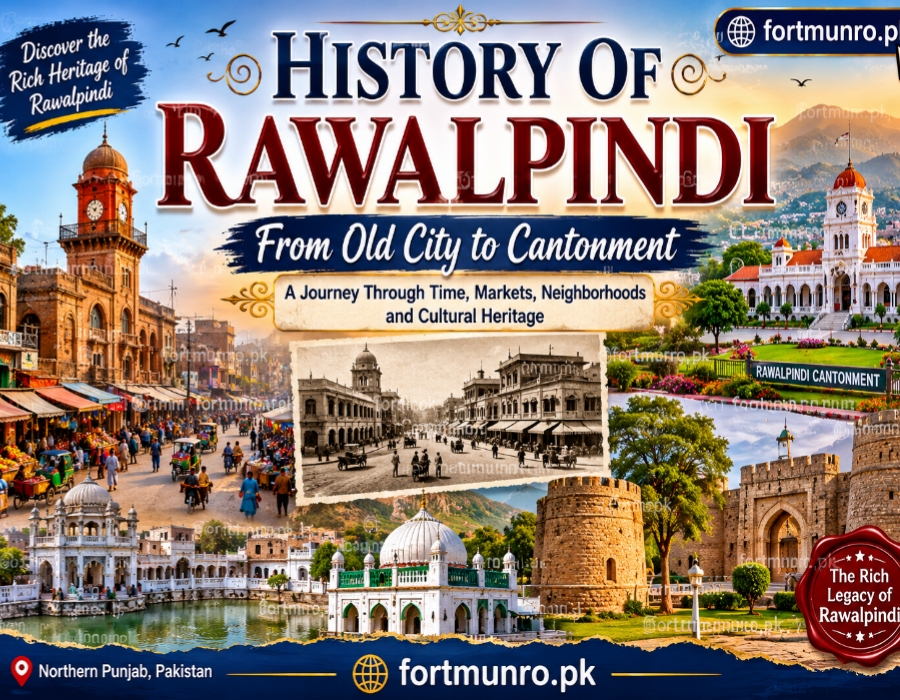
The History of Rawalpindi reflects centuries of cultural diversity, trade, and urban growth. From its modest beginnings around Dingi Khoi and Purana Qila, the city evolved into a thriving regional center.
The History of Rawalpindi also highlights the contributions of Sikh rulers and British administrators who established markets, neighborhoods, educational institutions, and cantonment areas that continue to influence the city today.
Understanding the History of Rawalpindi allows visitors and researchers to appreciate the city’s rich heritage, historic landmarks, and enduring role in the development of northern Punjab and Pakistan.
FAQ,s.
What is the historical origin of Rawalpindi?
Rawalpindi began as a small settlement around Dingi Khoi and Purana Qila. Over time, it expanded under Sikh and British rule into a major urban center.
Why is Raja Bazaar called Raja Bazaar?
Raja Bazaar was named after the Maharaja of Kashmir, who constructed houses and caravanserais in the area during the Sikh period.
Which markets were established during the Sikh era in Rawalpindi?
Important markets established during the Sikh era included Bhabhra Bazaar, Kasehra Bazaar, Mochi Bazaar, Bansan Wala Bazaar, and Qasai Gali.
What was Bansan Wala Bazaar famous for?
Bansan Wala Bazaar was known for its bamboo market, where bamboo products were bought and sold in large quantities.
What happened to the historic library of Sardar Sujan Singh?
The library contained rare books and manuscripts but was destroyed during the communal riots at the time of the Partition of India in 1947.
How did British rule influence the History of Rawalpindi?
The British transformed Rawalpindi by developing the cantonment, expanding infrastructure, and making it a key military headquarters in northern India.
What is the significance of Nala Lai in Rawalpindi?
Nala Lai historically served as the boundary between Rawalpindi city and the cantonment area.
Who was Shah Chan Chiragh?
Shah Chan Chiragh was a respected Sufi saint whose shrine became an important religious and cultural landmark in Rawalpindi.
Why is Trench Bhatta called Trench Bhatta?
The name originated from deep trenches created by brick kilns in the area. British officers referred to them as “Trenches of Bhattas,” which later became Trench Bhatta.
Why is the History of Rawalpindi important?
The History of Rawalpindi showcases the city’s cultural diversity, historic markets, religious heritage, and transformation into one of Pakistan’s most important urban and military centers.