
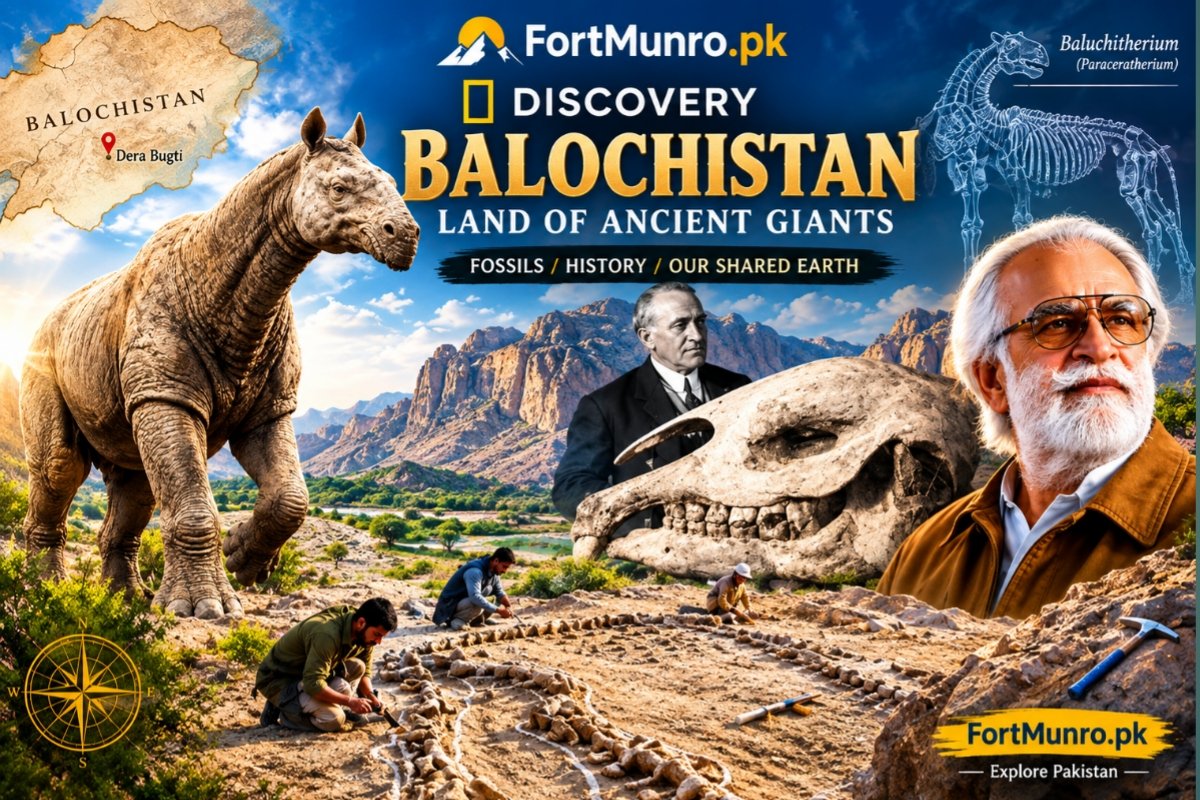
Balochitherium The Giant Mammal of Ancient Balochistan
Discover Balochitherium, the giant hornless mammal found near Dera Bugti, Balochistan. Explore its fossils, discovery, size, history, and extinction today!
Introduction
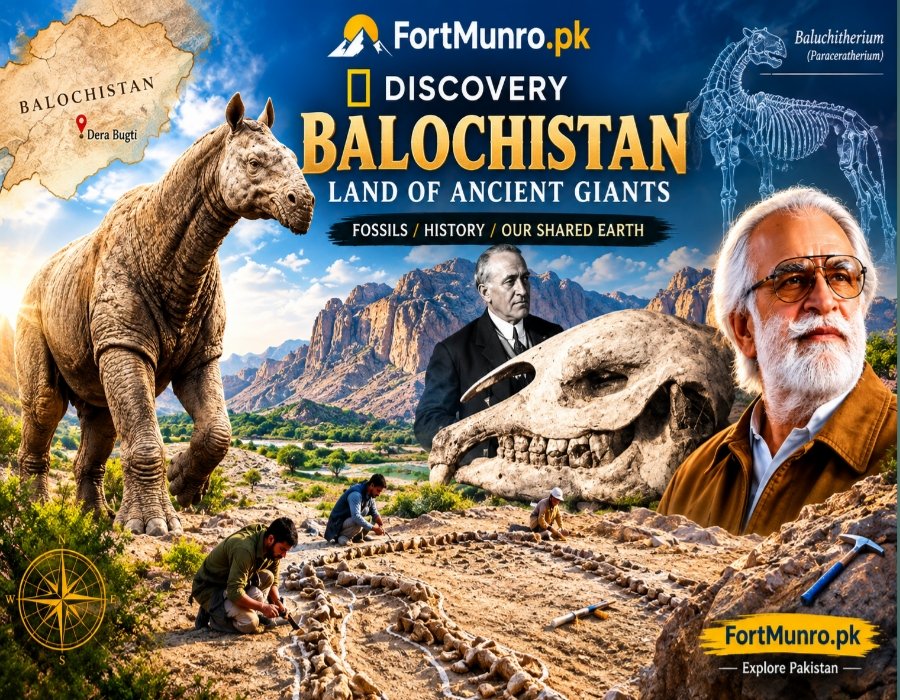
Balochitherium is one of the most fascinating prehistoric mammals ever associated with the land of Balochistan. Millions of years ago, the region around Dera Bugti was very different from the dry and rocky landscape seen today. Balochitherium lived in a much greener environment where forests and vegetation provided food for enormous herbivorous mammals.
The story of Balochitherium began with fossil discoveries in the Bugti Hills of Balochistan and later became an important chapter in the history of paleontology. Early researchers found enormous bones and jaws that revealed the existence of a hornless rhinoceros-like giant. The animal became famous for its extraordinary size and its connection with the ancient landscape of present-day Pakistan.
The story of Balochitherium is not only about fossils and prehistoric animals. It is also connected with Dera Bugti, scientific expeditions, the Geological Survey of Pakistan, and the preservation of important fossils. From its discovery to the later investigations of the Bugti Hills, the history of Balochitherium shows how much prehistoric information can remain hidden beneath the ground of Balochistan.
Quick Answer
What was Balochitherium?
Balochitherium was the name historically used for a gigantic hornless rhinoceros relative, generally associated with Paraceratherium, one of the largest known land mammals.
Where were its fossils found?
Important fossils associated with Balochitherium were discovered in the Dera Bugti and Bugti Hills region of Balochistan, Pakistan.
How big was Balochitherium?
Estimates vary among scientific reconstructions, but it was an exceptionally large land mammal, with a very tall shoulder height and a body mass comparable to several large elephants.
Was Balochitherium a meat-eater?
No. It was a herbivorous mammal that fed on vegetation.
Why is it important for Balochistan?
Its fossils provide evidence that parts of present-day Balochistan once had very different environments and supported remarkable prehistoric wildlife.
Location: Dera Bugti and the Bugti Hills
Where Balochitherium Was Found
Balochitherium is strongly connected with the Dera Bugti and Bugti Hills region of Balochistan. This area has become internationally important for paleontological research because its rocks preserve fossils from an ancient period when the environment was very different from the dry landscapes familiar today.
The fossil-bearing formations of the Bugti Hills have produced remains of several prehistoric animals. The Geological Survey of Pakistan’s museum in Quetta also displays paleontological material from Balochistan, including fossil material associated with the giant Baluchitherium from Dera Bugti.
An Ancient Landscape of Greenery
When these giant mammals lived in the region, Balochistan was not the same landscape that exists today. Rivers, vegetation and greener environments formed part of the ancient ecosystem. Such conditions provided food for large herbivores such as Balochitherium.
Over millions of years, geological and climatic changes transformed the region. The disappearance and reduction of vegetation changed the environment dramatically, making it difficult for some large herbivorous mammals to survive. The fossils left behind became a record of that vanished world.
The Discovery of Balochitherium
Early Fossil Discoveries
The scientific story became especially important in the early twentieth century when researchers investigated fossil-bearing deposits around the Bugti Hills. Geological and paleontological work in the region revealed enormous bones, jaws and other remains belonging to prehistoric mammals.
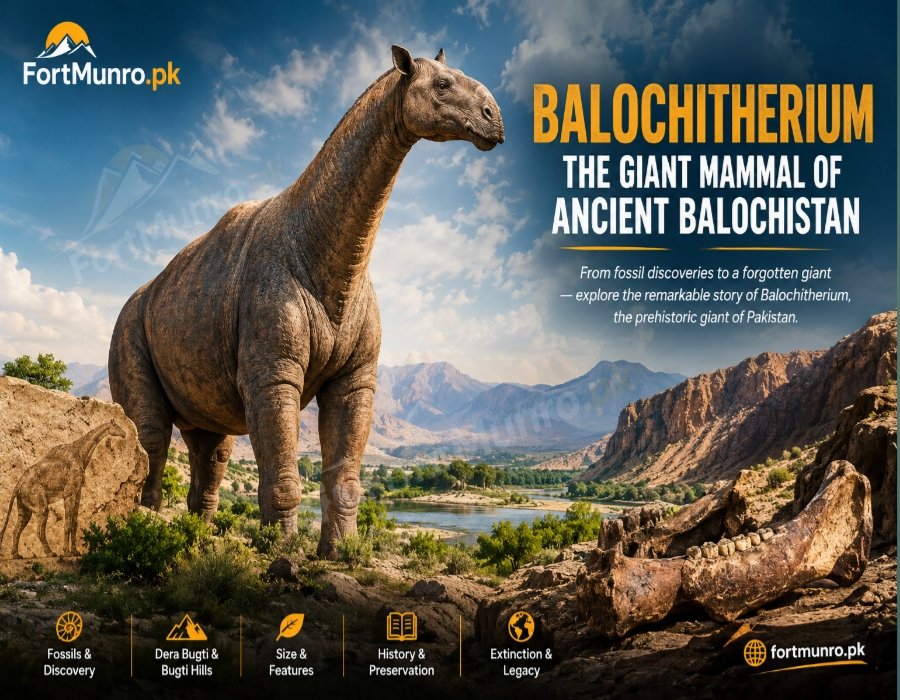
Clive Forster-Cooper played a major role in the early scientific study of these fossils. In 1911, he formally described Paraceratherium bugtiense from material associated with the Bugti Hills. Later, the name Baluchitherium became widely used for other giant rhinocerotoid remains from the region.
Why the Name Became Famous
The name Balochitherium became popular because it directly connected the prehistoric giant with Balochistan. Its history is scientifically complicated because different fossil specimens were given different names by researchers before later studies showed relationships between several of these forms.
Today, scientists generally use Paraceratherium as the accepted genus name for the famous giant hornless rhinocerotoid, while Baluchitherium is treated as a historical name or synonym in much of the scientific literature. Nevertheless, the name Balochitherium remains widely recognized in popular discussions of Pakistan’s prehistoric heritage.
The Giant Body of Balochitherium
A Mammal Larger Than Modern Rhinos
Balochitherium was not an ordinary rhinoceros. It belonged to an extinct group of giant hornless rhinocerotoids and possessed an extremely large body, long legs and a long neck that helped it reach vegetation above the ground.
Its appearance would have been extraordinary compared with modern mammals. Although its body was enormous, its long legs and neck gave it a relatively balanced shape. Unlike modern rhinoceroses, it did not have a prominent horn on its nose.
Size and Physical Features
Scientific estimates differ because no single completely preserved individual provides every measurement needed for an exact reconstruction. Nevertheless, the animal was unquestionably among the largest terrestrial mammals known to science.
| Feature | Balochitherium / Paraceratherium |
|---|---|
| Animal group | Giant hornless rhinocerotoid |
| Diet | Herbivore |
| Major fossil region | Dera Bugti, Bugti Hills |
| Geological age | Oligocene–early Miocene records |
| Modern relationship | Related to rhinoceroses |
| Horn | No prominent nasal horn |
| Main food | Leaves and other vegetation |
| Scientific name commonly used | Paraceratherium |
Its huge size would have offered advantages against many predators, while its long neck allowed it to browse from vegetation that smaller herbivores could not easily reach. In the ancient ecosystem of Balochistan, such an animal would have been a remarkable sight.
The Fossils and the Ten Metal Boxes
A Remarkable Chapter in Recent History
The story of the fossils later became connected with the modern history of Balochistan. Accounts published about the discovery and preservation of these fossils state that Nawab Akbar Bugti kept important Baluchitherium bones in ten metal containers as a form of protection for this prehistoric heritage.
After his death in 2006, reports said that the containers were recovered and the fossils were sent to the Geological Survey of Pakistan. This gave the story another unusual dimension: prehistoric remains discovered in the land of the Bugti Hills became connected with the modern history of the region.
Preservation of Pakistan’s Fossil Heritage
The preservation of these fossils is important because fossils are more than old bones. They provide evidence about ancient animals, climates, landscapes and geological changes. Each fossil can help researchers understand what life was like millions of years ago.
The Geological Survey of Pakistan maintains a geological and paleontological museum in Quetta. Its collections include fossils from different parts of Pakistan, including important material from Balochistan. This makes the preservation and documentation of prehistoric remains an important part of Pakistan’s scientific heritage.
Why Did Balochitherium Become Extinct?
Climate and Environmental Change
The extinction of giant prehistoric mammals cannot usually be explained by a single event. Changes in climate, vegetation, geography and available food can gradually affect large herbivores. The ancient environment of the Bugti Hills changed substantially over geological time.
As greener habitats changed and vegetation patterns shifted, the enormous body of Balochitherium would have required substantial amounts of food. Environmental changes could therefore have placed increasing pressure on populations of these giant mammals.
The End of an Ancient Giant
Eventually, the giant rhinocerotoids disappeared from the fossil record. Their extinction marked the end of one of the most extraordinary chapters in the evolutionary history of large land mammals.
The fossils they left behind, however, continue to tell their story. In the rocks of Balochistan, scientists can still investigate the ancient ecosystems in which these giants lived and understand how dramatically the region changed over millions of years.
Balochitherium and the Identity of Balochistan
A Prehistoric Symbol of the Region
Balochitherium has a special place in discussions about the prehistoric heritage of Balochistan because its fossils connect the province with one of the most remarkable groups of giant land mammals known from the fossil record.
The story also reminds us that the history of Balochistan is far older than human history. Beneath its mountains, valleys and rocky landscapes are geological records that preserve evidence of ancient animals and environments.
A Hidden Heritage Beneath the Ground
The fossils of Balochitherium show that today’s landscape cannot always be used to imagine what a region looked like millions of years ago. The dry and rocky areas of modern Balochistan once formed part of ecosystems that supported enormous mammals.
For this reason, Balochitherium can be viewed as an important part of Pakistan’s paleontological heritage. Its story combines science, geology, ancient wildlife and the modern history of Balochistan.
Conclusion
Balochitherium represents one of the most extraordinary prehistoric animals connected with Balochistan. The giant hornless rhinocerotoid lived millions of years ago, when the environment of the Bugti Hills was very different from the landscape seen there today. Its fossils provide an important window into the ancient wildlife of Pakistan.
The scientific history of Balochitherium is equally fascinating. Early discoveries in the Dera Bugti region led researchers to study enormous fossil bones and jaws, while later expeditions significantly expanded knowledge of the ancient animals of the Bugti Hills. Although modern scientific classification generally places the famous giant within Paraceratherium, the historic name Balochitherium remains deeply associated with Balochistan.
Today, the story of Balochitherium is a reminder that the land of Balochistan contains a remarkable prehistoric record. These fossils connect modern Pakistan with a world that existed millions of years ago, when giant herbivorous mammals moved through greener landscapes. Protecting and studying this heritage can help future generations understand the ancient natural history hidden beneath Pakistan’s soil.
FAQs.
What is Balochitherium?
Balochitherium ایک قدیم دیو ہیکل اور بغیر سینگ والا rhinoceros relative تھا، جسے جدید سائنسی درجہ بندی میں عموماً Paraceratherium سے منسلک کیا جاتا ہے۔
Where was Balochitherium discovered?
اس کے اہم فوسلز بلوچستان کے ڈیرہ بگٹی اور بگٹی ہلز کے علاقے سے منسلک ہیں، جہاں طویل عرصے سے paleontological research جاری رہی ہے۔
Was Balochitherium a dinosaur?
نہیں۔ Balochitherium ڈائنوسار نہیں بلکہ ایک دیو ہیکل ممالیہ تھا اور گینڈوں کے قدیم رشتہ داروں کے گروہ سے تعلق رکھتا تھا۔
Did Balochitherium have a horn?
نہیں، یہ hornless rhinocerotoid تھا، یعنی اس کے سر پر جدید گینڈے جیسا نمایاں سینگ نہیں تھا۔
What did Balochitherium eat?
یہ ایک herbivore تھا اور مختلف قسم کی نباتات، پتے اور درختوں کی سبز خوراک کھاتا تھا۔
Why was Balochitherium so large?
اس کی جسامت کے بارے میں مختلف سائنسی اندازے موجود ہیں۔ اس کا بڑا جسم اور لمبی گردن اسے بلند سطح پر موجود نباتات تک پہنچنے میں مدد دے سکتی تھی۔
How old are the fossils?
ڈیرہ بگٹی کے علاقے سے وابستہ Baluchitherium/Paraceratherium fossils تقریباً 30 million years پرانے ارضیاتی ریکارڈ سے تعلق رکھتے ہیں۔
Where can people learn about these fossils in Pakistan?
پاکستان میں Geological Survey of Pakistan کا میوزیم کوئٹہ میں geological اور paleontological specimens رکھتا ہے، جن میں بلوچستان کے اہم fossils بھی شامل ہیں۔
Why is Balochitherium important for Pakistan?
یہ پاکستان کی prehistoric biodiversity اور geological history کا اہم حصہ ہے اور اس سے معلوم ہوتا ہے کہ موجودہ بلوچستان کا ماحول ماضی میں بہت مختلف تھا۔
Is Balochitherium still the accepted scientific name?
موجودہ سائنسی لٹریچر میں Paraceratherium زیادہ استعمال ہونے والا نام ہے، جبکہ Baluchitherium تاریخی طور پر استعمال ہونے والا نام اور کئی classifications میں synonym کے طور پر ملتا ہے۔