
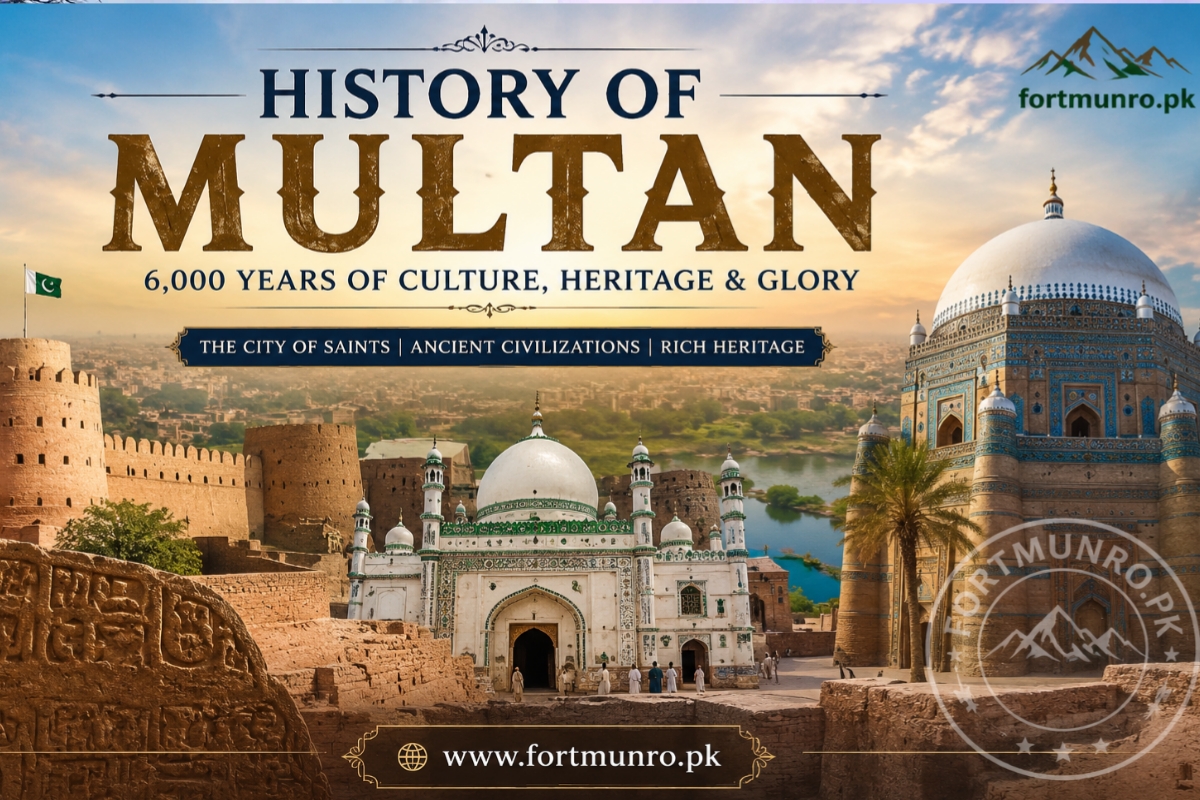
History of Multan: 6000 Years of Culture and Glory
Explore the History of Multan, a 6,000-year-old city known for ancient civilizations, Sufi heritage, trade routes, and cultural significance.
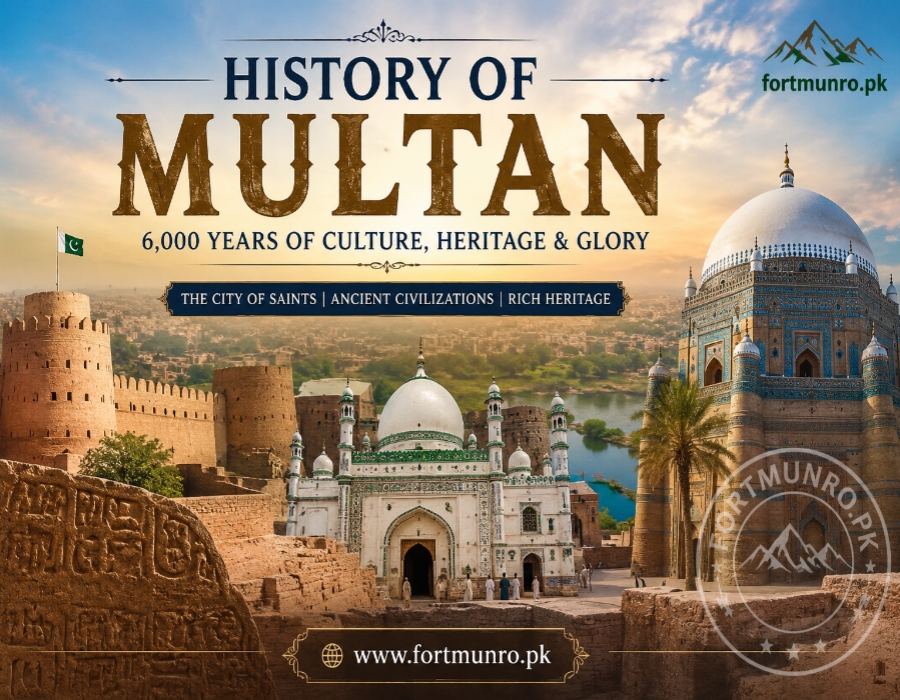
Introduction
Multan is one of the oldest continuously inhabited cities in South Asia, with a history spanning nearly 6,000 years. The History of Multan reflects the rise and fall of ancient civilizations, powerful empires, and thriving trade networks that connected the region with Central Asia, Persia, and beyond.Throughout the centuries, the History of Multan has been shaped by religious diversity, cultural richness, and economic importance. From the famous Sun Temple to Buddhist centers and Islamic institutions, the city has remained a focal point of spiritual and intellectual development.
Today, the History of Multan continues to attract historians, researchers, and travelers who wish to explore its magnificent forts, shrines, and historical landmarks. Known as the “City of Saints,” Multan remains one of Pakistan’s most significant cultural and spiritual centers.
Quick Answer
The History of Multan dates back nearly 6,000 years, making it one of the oldest cities in South Asia. The city witnessed ancient Hindu, Buddhist, Greek, Islamic, Mughal, Sikh, and British influences. Today, Multan is famous for its Sufi heritage, historic fort, shrines, and role as the cultural heart of Southern Punjab.
History of Multan Through the Ages
Ancient Origins of Multan
ملتان برصغیر کے قدیم ترین شہروں میں شمار ہوتا ہے اور اس کی تاریخ تقریباً چھ ہزار سال پر محیط ہے۔ قدیم روایات کے مطابق اسے ’’مولو ستھان‘‘ یا سورج دیوتا کی سرزمین کہا جاتا تھا۔ اسی نسبت سے یہاں مشہور سورج مندر قائم تھا جو صدیوں تک مذہبی مرکز کی حیثیت رکھتا رہا۔
وادیٔ سندھ کی قدیم تہذیب کے ہم عصر ہونے کی وجہ سے ملتان تجارتی اور ثقافتی سرگرمیوں کا اہم مرکز تھا۔ قدیم زمانے میں یہاں سے مختلف علاقوں کے ساتھ تجارتی روابط قائم تھے جنہوں نے شہر کی ترقی میں اہم کردار ادا کیا۔
Greek and Buddhist Influence
یونانی مورخین کے مطابق سکندر اعظم نے مالی قوم کے قلعے پر حملہ کیا جو موجودہ ملتان سمجھا جاتا ہے۔ اس جنگ کے دوران سکندر شدید زخمی ہوا، جس کا ذکر متعدد تاریخی روایات میں ملتا ہے۔
بعد ازاں بدھ مت کے دور میں ملتان ایک اہم مذہبی مرکز بن گیا۔ کنشک کے زمانے میں شہر نے ترقی کی نئی منازل طے کیں اور تجارتی راستے چین، ایران اور وسط ایشیا تک پھیل گئے۔
Islamic Golden Age in the History of Multan
Arrival of Islam
محمد بن قاسم کی فتوحات کے بعد ملتان اسلامی سلطنت کا اہم حصہ بن گیا۔ عرب حکمرانوں نے شہر کو انتظامی اور تجارتی مرکز کے طور پر ترقی دی، جبکہ سورج مندر کے خزانے کی وجہ سے یہ شہر خاص اہمیت رکھتا تھا۔
اسلامی دور میں ملتان علم، تجارت اور فنون کا مرکز بن گیا۔ عرب تاجروں اور علماء کی آمد نے شہر کی معاشی اور فکری ترقی میں نمایاں کردار ادا کیا۔
Major Developments During Islamic Rule
اسلامی دور میں ملتان میں کئی اہم تبدیلیاں رونما ہوئیں:
- اسلامی تعلیمات کا فروغ
- تجارتی سرگرمیوں میں اضافہ
- مدارس اور علمی مراکز کا قیام
- عرب اور وسط ایشیائی روابط کی مضبوطی
- شہر کی انتظامی اہمیت میں اضافہ
ان عوامل نے ملتان کو برصغیر کے اہم ترین اسلامی مراکز میں شامل کر دیا۔ اسی دور میں شہر کی مذہبی اور ثقافتی شناخت مزید مستحکم ہوئی۔
Sufi Heritage of Multan
Famous Saints of Multan
ملتان کی شناخت اس کے عظیم صوفیاء کرام سے وابستہ ہے۔ حضرت بہاؤالدین زکریا، حضرت شاہ رکن عالم، حضرت شاہ شمس تبریزی اور دیگر بزرگوں نے شہر کو روحانی مرکز کی حیثیت عطا کی۔
ان بزرگوں کی تعلیمات نے نہ صرف ملتان بلکہ پورے برصغیر میں اسلام اور تصوف کے فروغ میں اہم کردار ادا کیا۔ آج بھی ان کے مزارات لاکھوں زائرین کو اپنی طرف متوجہ کرتے ہیں۔
Why Multan Became the City of Saints
- صوفیاء کرام کی بڑی تعداد کی آمد
- خانقاہی نظام کا فروغ
- اسلامی تعلیمات کی اشاعت
- روحانی اور مذہبی مراکز کا قیام
ان وجوہات کی بنا پر ملتان کو ’’مدینۃ الاولیاء‘‘ یعنی اولیاء کا شہر کہا جانے لگا، جو آج بھی اس کی پہچان ہے۔
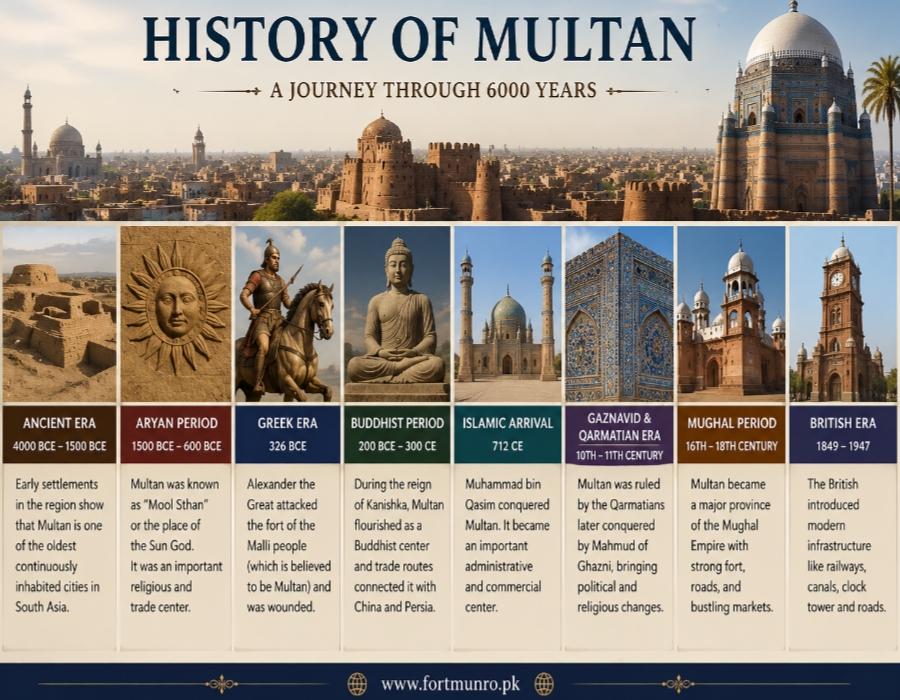
Multan During Mughal, Sikh and British Rule
Mughal and Afghan Era
مغل دور میں ملتان ایک اہم صوبائی مرکز تھا۔ اس زمانے میں قلعے کو مضبوط بنایا گیا، شاہی سڑکیں تعمیر ہوئیں اور بازاروں کی ترقی پر خصوصی توجہ دی گئی۔
بعد ازاں نادر شاہ اور احمد شاہ ابدالی نے ملتان پر قبضہ کیا۔ افغان حکمرانوں کے دور میں بھی شہر اپنی تجارتی اہمیت برقرار رکھنے میں کامیاب رہا۔
Sikh and British Administration
رنجیت سنگھ کے دور میں ملتان سکھ سلطنت کا حصہ بنا۔ دیوان ساون مل اور دیوان مول راج نے شہر کی انتظامیہ اور تعمیرات میں نمایاں کردار ادا کیا۔
1848-49 کی ملتان جنگ کے بعد برطانوی اقتدار قائم ہوا۔ انگریزوں نے جدید سڑکیں، ریلویز، گھنٹہ گھر، نہری نظام اور سرکاری عمارتیں تعمیر کیں جنہوں نے جدید ملتان کی بنیاد رکھی۔
Historical Timeline of Multan
| Period | Major Event |
|---|---|
| Ancient Era | Establishment of early settlements |
| Aryan Period | Religious and trade center |
| Greek Era | Alexander’s campaign in Multan |
| Buddhist Period | Growth under Kushan rule |
| 712 CE | Conquest by Muhammad bin Qasim |
| Ghaznavid Era | End of Qarmatian rule |
| Mughal Period | Administrative and economic growth |
| Sikh Rule | Governance under Ranjit Singh |
| British Era | Development of modern infrastructure |
Location of Multan
| Detail | Information |
|---|---|
| City | Multan |
| Province | Punjab |
| Country | Pakistan |
| Region | Southern Punjab |
| Famous For | Sufi Shrines, Multan Fort, Blue Pottery |
| Coordinates | 30.1575° N, 71.5249° E |
Conclusion
The History of Multan is a remarkable journey through thousands of years of civilization, culture, and spiritual development. From ancient temples and trade routes to Islamic scholarship and Sufi traditions, the city has played a vital role in the history of South Asia.
The History of Multan also highlights the city’s resilience through various periods of foreign invasions, political changes, and cultural transformations. Each era left behind monuments, traditions, and stories that continue to shape the city’s identity.
Today, the History of Multan remains alive in its shrines, fortifications, bazaars, and traditions. As one of Pakistan’s most historic cities, Multan continues to preserve its rich heritage while serving as the cultural and economic heart of Southern Punjab.
FAQs.
How old is Multan?
Multan is considered one of the oldest continuously inhabited cities in South Asia, with a history of nearly 6,000 years.
Why is Multan called the City of Saints?
Multan is called the “City of Saints” because many renowned Sufi saints, including Hazrat Bahauddin Zakariya and Hazrat Shah Rukn-e-Alam, lived and preached there.
What was the ancient name of Multan?
Historically, Multan was known by names such as Mool Sthan, Molastan, and Multan, reflecting its ancient religious significance.
What was the importance of the Sun Temple in Multan?
The Sun Temple was one of the most famous religious sites in ancient Multan and attracted pilgrims from different regions for centuries.
When did Islam arrive in Multan?
Islam arrived in Multan in 712 CE when Muhammad bin Qasim conquered the region during the Umayyad Caliphate.
What role did Multan play in trade?
Multan served as a major trade hub connecting South Asia with Central Asia, Persia, and the Middle East through important commercial routes.
Which famous Sufi saints are associated with Multan?
Notable saints associated with Multan include Hazrat Bahauddin Zakariya, Hazrat Shah Rukn-e-Alam, Hazrat Shah Shams Tabriz, and Hazrat Yusuf Gardez.
What happened to Multan during the Mughal period?
During the Mughal era, Multan became an important provincial center with improved administration, fortified structures, roads, and markets.
How did British rule influence Multan?
The British introduced modern infrastructure, including railways, roads, administrative buildings, irrigation systems, and educational institutions.
Why is the History of Multan important?
The History of Multan is important because it reflects thousands of years of cultural, religious, economic, and political developments that shaped South Asia.