
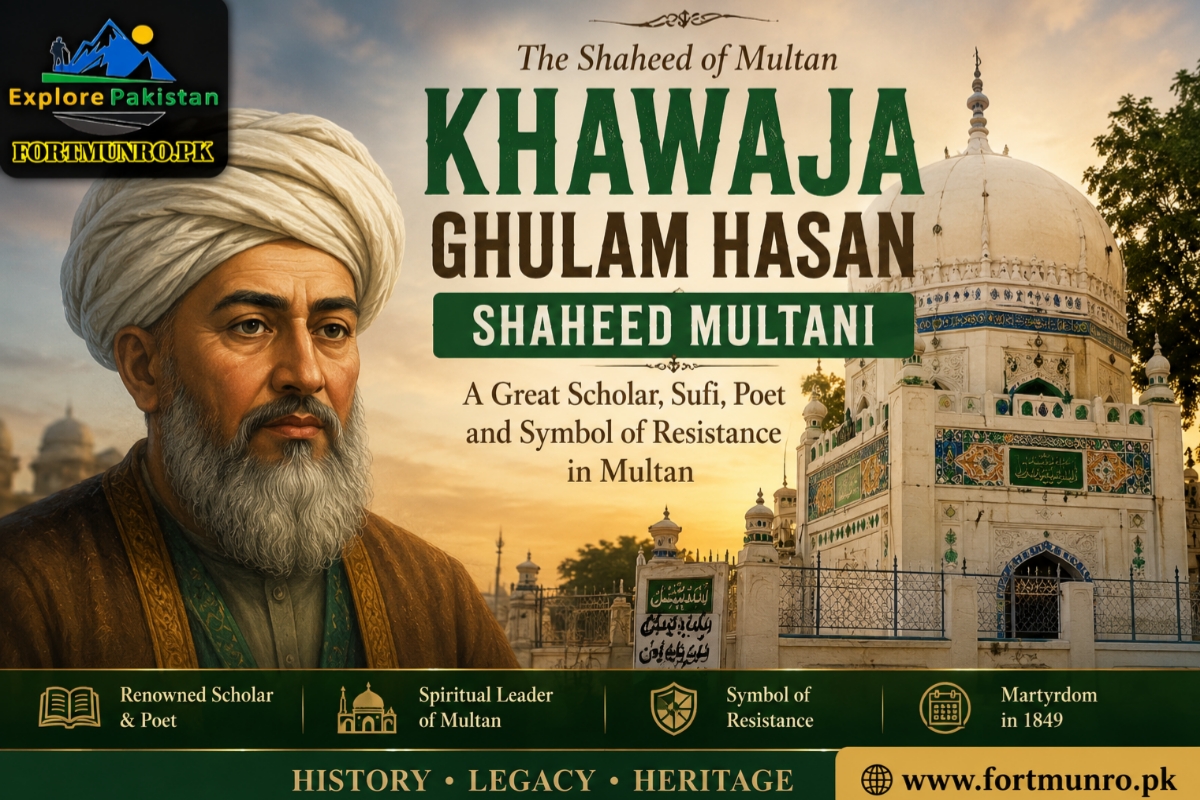
Discover the history, political influence, martyrdom, shrine, and legacy of Khawaja Ghulam Hasan Shaheed Multani, a renowned Sufi scholar of Multan.
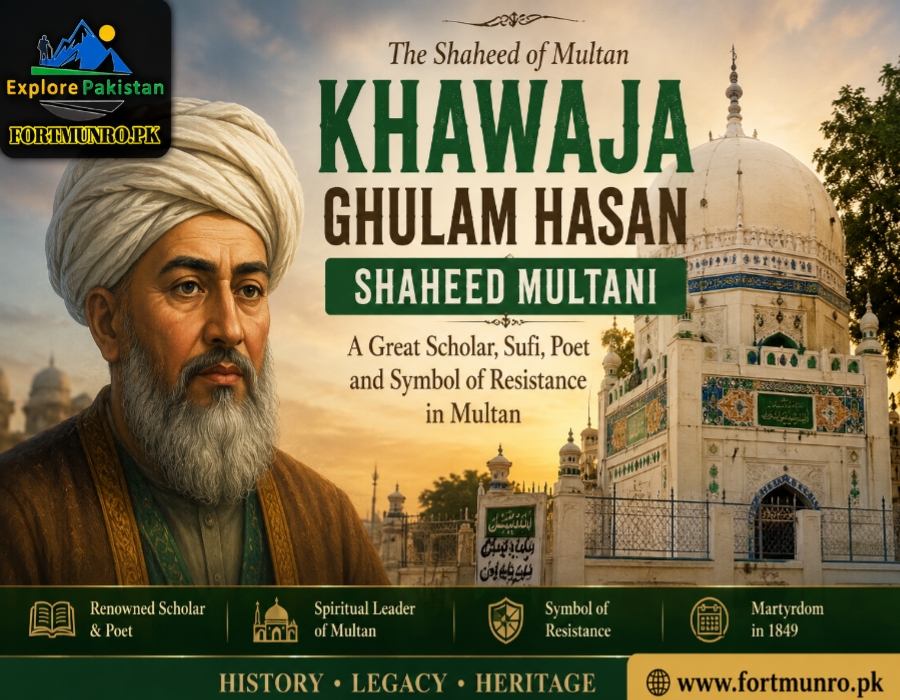
Introduction
Khawaja Ghulam Hasan Shaheed Multani was one of the most influential spiritual, scholarly, and social personalities in nineteenth-century Multan. Khawaja Ghulam Hasan Shaheed Multani earned immense respect for his knowledge, wisdom, and leadership during the Sikh and early British periods.
Beyond being a respected Sufi scholar and Persian poet, Khawaja Ghulam Hasan Shaheed Multani played an important role in shaping the political and social environment of Multan. His influence among the people made him a symbolic leader whose advice was valued by both citizens and local authorities.
Today, Khawaja Ghulam Hasan Shaheed Multani is remembered as the “Shaheed of Multan.” His shrine continues to attract visitors, while his life, sacrifice, and literary contributions remain an important part of Multan’s historical and spiritual heritage.
Quick Answer
| Question | Answer |
|---|---|
| Who was Khawaja Ghulam Hasan Shaheed Multani? | He was a renowned Sufi scholar, Persian poet, social leader, and influential citizen of Multan who was martyred in 1849. |
| Why is he called Shaheed-e-Multan? | He was martyred during the British conquest of Multan because he was regarded as a symbol of public resistance. |
| Where is his shrine located? | His shrine is located in Multan, Punjab, Pakistan. |
| Was he a government official? | No. He held no official government office but had significant social and political influence. |
Location
| Information | Details |
|---|---|
| Place | Multan |
| Province | Punjab |
| Country | Pakistan |
| Birth | 1787 |
| Martyrdom | 1849 |
| Shrine | Multan City |
Table of Contents
| Section |
|---|
| Early Life of Khawaja Ghulam Hasan Shaheed Multani |
| Political Importance in Multan |
| Role During Sikh and British Rule |
| The Story Behind “Keys of Multan” |
| Shrine and Spiritual Legacy |
| Conclusion |
Early Life of Khawaja Ghulam Hasan Shaheed Multani
Birth, Education and Scholarship
خواجہ غلام حسن شہید ملتانی کا اصل نام منشی غلام حسن تھا۔ آپ 1787ء میں محلہ آغا پورہ، ملتان میں پیدا ہوئے۔ آپ نے عربی، فارسی، فقہ، منطق، صرف و نحو اور دیگر اسلامی علوم میں اعلیٰ مہارت حاصل کی۔
علمی قابلیت، اخلاقی کردار اور روحانی مقام کی وجہ سے Khawaja Ghulam Hasan Shaheed Multani ملتان کے ممتاز علماء اور صوفی بزرگوں میں شمار ہونے لگے۔ ان کی شخصیت مذہبی، سماجی اور فکری رہنمائی کا مرکز تھی۔
Literary and Spiritual Contributions
انہوں نے فارسی زبان میں متعدد قصائد، مناجات اور صوفیانہ کلام تحریر کیا۔ ان کا دیوانِ فارسی آج بھی ان کی علمی عظمت کی گواہی دیتا ہے۔
ان کی شاعری میں عشقِ الٰہی، اخلاق، روحانیت اور انسان دوستی نمایاں موضوعات ہیں، جس کی وجہ سے وہ ایک ممتاز صوفی شاعر کے طور پر بھی جانے جاتے ہیں۔
Political Importance of Khawaja Ghulam Hasan Shaheed Multani
Unofficial Leadership in Multan
اگرچہ خواجہ غلام حسن کسی سرکاری منصب پر فائز نہیں تھے، لیکن شہر کے علمی اور بااثر خاندان سے تعلق رکھنے کی وجہ سے ان کی رائے کو بہت اہمیت حاصل تھی۔
شہر کے اہم فیصلوں، تنازعات اور عوامی معاملات میں ان کی مشاورت لی جاتی تھی۔ اسی وجہ سے انہیں ملتان کا غیر رسمی رہنما تصور کیا جاتا تھا۔
Key Reasons Behind His Political Influence
- عوام میں غیر معمولی احترام
- اعلیٰ علمی و دینی مقام
- سکھ حکام کی مشاورت کا حصہ
- مقامی سماجی قیادت
- عوامی مزاحمت کی علامت
- اہلِ قلم خاندان سے تعلق
Role During Sikh and British Rule
His Position During Sikh Rule
سکھ دور حکومت (1818–1848) میں خواجہ غلام حسن کو مقامی معززین اور اہلِ قلم میں نمایاں مقام حاصل تھا۔ سکھ حکام بھی ان کے علم اور تجربے سے فائدہ اٹھاتے تھے۔
وہ مالیاتی، انتظامی اور سماجی معاملات میں رہنمائی فراہم کرتے تھے، جس سے ان کا اثر مزید مضبوط ہوا۔
Why the British Considered Him a Threat
1848–49 کی اینگلو سکھ جنگ کے دوران انگریزوں نے محسوس کیا کہ عوامی مزاحمت کا اصل مرکز خواجہ غلام حسن ہیں۔
اسی سیاسی سوچ کے باعث انہیں مزاحمت کی علامت سمجھا گیا اور بالآخر 1849ء میں شہید کر دیا گیا۔
The Story Behind the “Keys of Multan”
Historical Analysis
“ملتان کی چابیاں” والی روایت دراصل ایک سیاسی استعارہ تھی۔ اس کا مطلب حقیقی قلعے یا شہر کی چابیاں نہیں بلکہ عوامی اثر و رسوخ تھا۔
تاریخی شواہد کے مطابق خواجہ غلام حسن کسی سرکاری عہدے پر نہیں تھے، اس لیے ان کے پاس حقیقی حکومتی چابیاں ہونے کا کوئی ثبوت موجود نہیں۔
Important Historical Facts
- یہ روایت علامتی ہے۔
- حقیقی چابیوں کا کوئی تاریخی ثبوت نہیں۔
- انگریز انہیں عوامی مزاحمت کی علامت سمجھتے تھے۔
- ان کی شہادت سیاسی مزاحمت کو کمزور کرنے کی کوشش تھی۔
Shrine and Lasting Legacy
Shrine of Khawaja Ghulam Hasan Shaheed Multani
خواجہ غلام حسن شہید ملتانی کا مزار ملتان شہر میں واقع ہے جہاں ہر سال عرس منعقد ہوتا ہے۔
ملک بھر سے زائرین اور عقیدت مند حاضری دیتے ہیں اور ان کی خدمات کو خراجِ عقیدت پیش کرتے ہیں۔
His Legacy Today
آج بھی Khawaja Ghulam Hasan Shaheed Multani کو ایک عظیم صوفی، عالم، شاعر اور شہید کے طور پر یاد کیا جاتا ہے۔
ان کی زندگی علم، روحانیت، عوامی خدمت اور مزاحمت کی علامت ہے جو نئی نسل کے لیے مشعلِ راہ ہے۔
Conclusion
Khawaja Ghulam Hasan Shaheed Multani was far more than a respected scholar; he was a symbol of knowledge, leadership, and public trust in Multan. His influence shaped the city’s religious, social, and political landscape during a critical period of history.
Although the famous phrase about the “Keys of Multan” is symbolic rather than literal, it reflects the remarkable public influence that Khawaja Ghulam Hasan Shaheed Multani enjoyed among the people of Multan.
Today, his shrine, literary works, and historical legacy continue to inspire visitors, researchers, and history enthusiasts. The life of Khawaja Ghulam Hasan Shaheed Multani remains an important chapter in the history of Multan and Pakistan.
FAQs.
Who was Khawaja Ghulam Hasan Shaheed Multani?
Khawaja Ghulam Hasan Shaheed Multani was a renowned Sufi scholar, Persian poet, social leader, and influential citizen of Multan who was martyred in 1849.
What was the real name of Khawaja Ghulam Hasan Shaheed Multani?
His real name was Munshi Ghulam Hasan, and he became widely known as Khawaja Ghulam Hasan Shaheed Multani after his martyrdom.
Why is Khawaja Ghulam Hasan called Shaheed-e-Multan?
He is called Shaheed-e-Multan because he was martyred during the British conquest of Multan in 1849 due to his influence and support for public resistance.
Where is the shrine of Khawaja Ghulam Hasan Shaheed Multani located?
The shrine of Khawaja Ghulam Hasan Shaheed Multani is located in Multan, Punjab, Pakistan, where visitors gather throughout the year.
Was Khawaja Ghulam Hasan a government official?
No. He did not hold any official government position, but he was an influential scholar and respected adviser in Multan.
What is the meaning of the “Keys of Multan” story?
The phrase “Keys of Multan” is a symbolic expression referring to his influence over the people of Multan, not to actual physical keys.
What role did Khawaja Ghulam Hasan play during the Sikh and British periods?
He served as an influential religious scholar and community leader whose advice was respected by local authorities and citizens during both periods.
What are the literary contributions of Khawaja Ghulam Hasan Shaheed Multani?
He wrote Persian poetry, devotional verses, supplications, and Sufi literature focusing on spirituality, ethics, and the love of God.
Why is Khawaja Ghulam Hasan Shaheed Multani historically important?
He is remembered for his scholarship, spiritual leadership, social influence, and symbolic role in the resistance against British rule in Multan.
Can visitors still visit the shrine of Khawaja Ghulam Hasan Shaheed Multani?
Yes. The shrine remains an important historical and spiritual site in Multan, where devotees and tourists visit to pay their respects.