
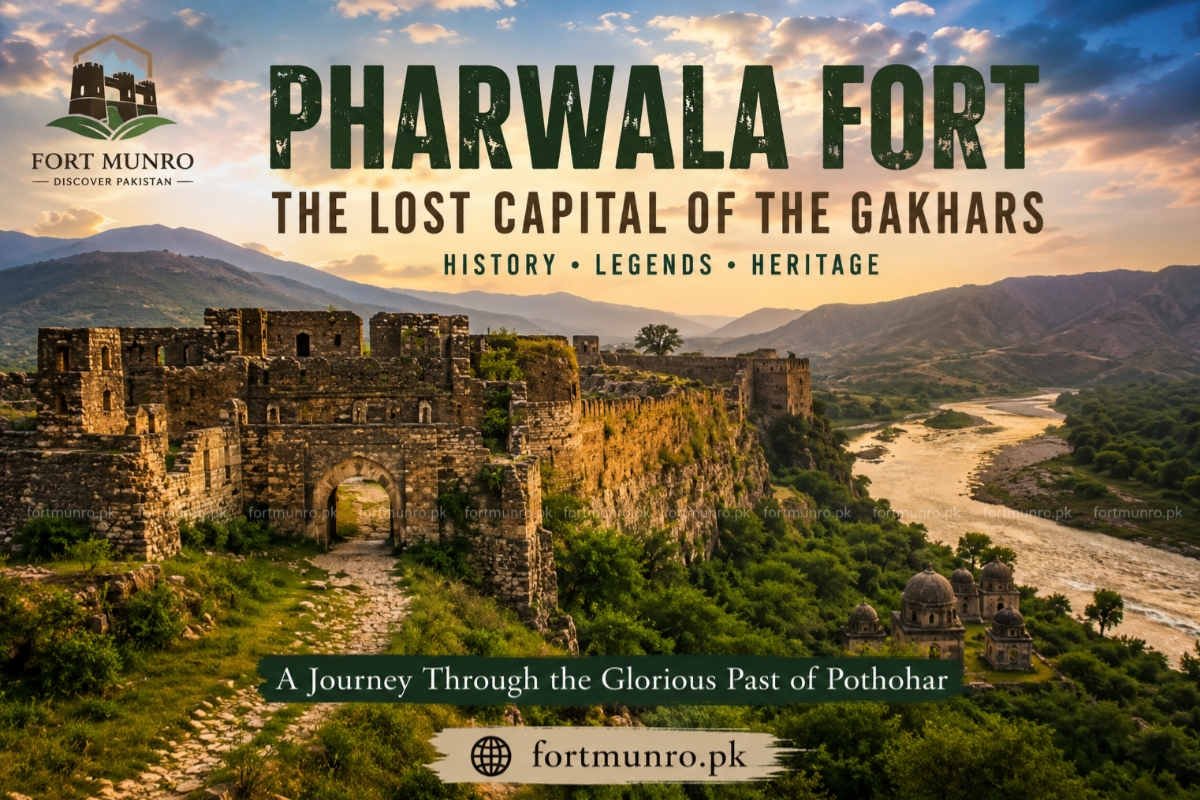
Pharwala Fort – The Lost Capital of Gakhars
Explore the history of Pharwala Fort, the ancient Gakhar capital near Islamabad, filled with battles, legends, ruins, and heritage.
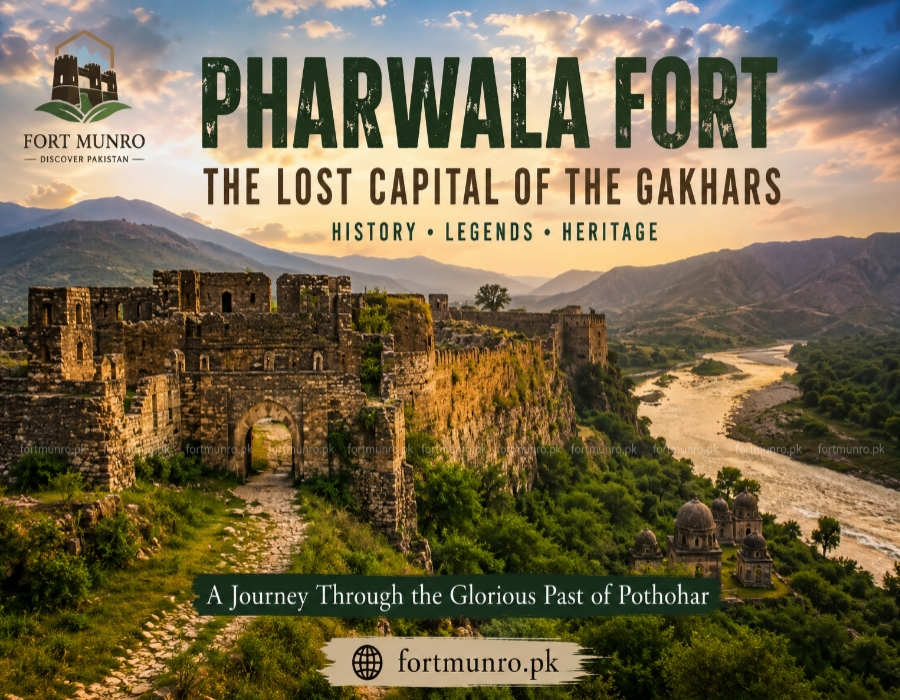
Introduction
Pharwala Fort History reflects the forgotten glory of the Gakhar rulers who once controlled vast regions of Pothohar. Located near Islamabad and Kahuta, this ancient fort stands as a silent witness to centuries of wars, royal politics, and changing empires.
During our visit to Pharwala Fort, we crossed streams, walked through ruined gates, and explored the remains of a once-powerful stronghold. The fort’s strategic location beside the Swan River and surrounded by hills made it one of the safest military forts of its time.
The Pharwala Fort History is deeply connected with rulers like Babur, Sher Shah Suri, Humayun, and the brave Gakhar tribe. Though much of the fort now lies in ruins, its stories of battles, loyalty, betrayal, and forgotten kings still make it one of Pakistan’s most fascinating historical sites.
History of Pharwala Fort Details.
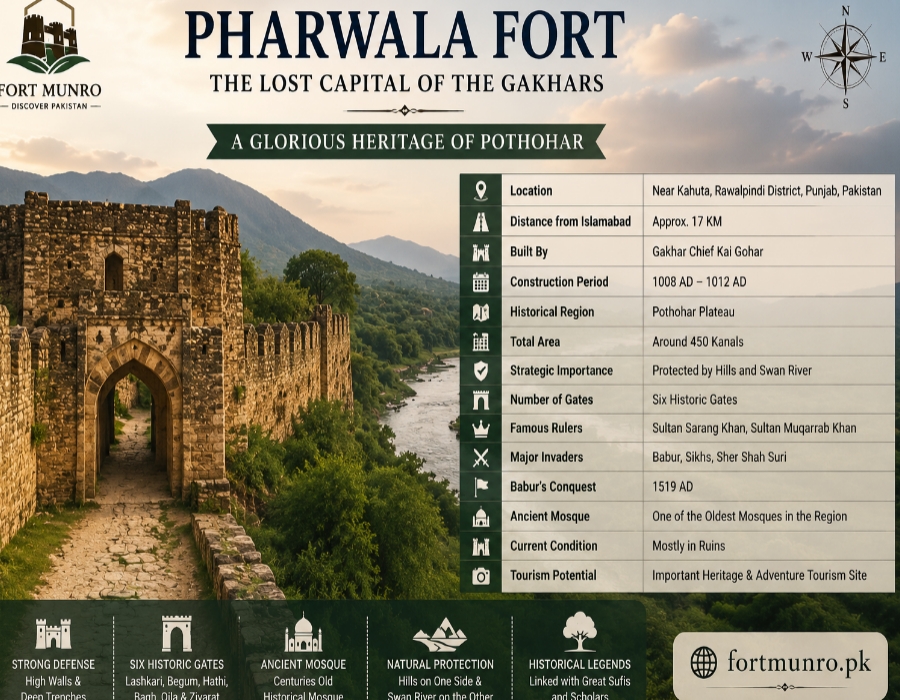
| Section | Details |
|---|---|
| Fort Name | Pharwala Fort |
| Local Name | قلعہ پھروالہ |
| Location | Near Kahuta, Rawalpindi District, Punjab, Pakistan |
| Distance from Islamabad | Approximately 17 km |
| Built By | Gakhar Chief Kai Gohar |
| Construction Period | Between 1008 AD – 1012 AD |
| Historical Region | Pothohar Plateau |
| Total Area | Around 450 Kanals |
| Strategic Importance | Located near Swan River and Himalayan foothills |
| Main Purpose | Military Defense & Capital of Gakhar State |
| Famous Rulers | Sultan Sarang Khan, Sultan Muqarrab Khan |
| Major Invaders | Babur, Sikhs, Sher Shah Suri |
| Babur’s Conquest | 1519 AD |
| Number of Gates | Six Historic Gates |
| Gate Names | Lashkari Gate, Begum Gate, Elephant Gate, Bagh Gate, Qila Gate, Ziyarat Gate |
| Ancient Mosque | One of the oldest mosques in the region |
| Defensive Features | Deep trenches, high walls, river protection |
| Wall Height | Around 28–30 feet |
| Wall Width | Up to 10 feet |
| Historical Events | Battles, Mughal alliances, political conflicts |
| Famous Incident | Humayun’s brother Kamran Mirza blinded here |
| Cultural Importance | Symbol of Gakhar history and Pothohar heritage |
| Present Condition | Mostly in ruins and neglected |
| Tourism Potential | Important historical and adventure tourism site |
| Nearby Attractions | Swan River, Pothohar Hills, Ancient Graves |
| Best Time to Visit | Winter and Spring Season |
| Accessibility | Partly accessible by road and short hiking trail |
| Historical Legacy | Former capital of the Gakhar Kingdom |
History of Pharwala Fort
Construction and Strategic Importance
قلعہ پھروالہ پوٹھوہار کے تاریخی خطے میں واقع ایک عظیم دفاعی قلعہ تھا جسے گکھڑ سردار کیگوہر نے تقریباً 1008ء سے 1012ء کے درمیان تعمیر کروایا۔ یہ قلعہ نہ صرف دفاعی لحاظ سے مضبوط تھا بلکہ شاہراہ ریشم اور کشمیر جانے والے اہم راستوں کے قریب ہونے کی وجہ سے تجارتی اور فوجی اہمیت بھی رکھتا تھا۔
قلعے کی ایک جانب دریائے سواں جبکہ دوسری طرف بلند پہاڑیاں تھیں، جس کی وجہ سے دشمن کے لیے حملہ کرنا انتہائی مشکل تھا۔ قلعے کی بلند دیواریں، گہری خندقیں، اور چھ عظیم دروازے اس کی مضبوطی کا ثبوت ہیں۔ یہی وجہ تھی کہ صدیوں تک یہ گکھڑ سلطنت کا طاقتور مرکز رہا۔
Our Visit to the Ancient Fort
اسلام آباد کے قریب واقع اس تاریخی مقام تک پہنچنا ایک دلچسپ تجربہ تھا۔ سڑک ختم ہونے کے بعد ہمیں پیدل ندی پار کرنی پڑی تاکہ قلعے تک رسائی حاصل ہو سکے۔ راستے میں مقامی لوگوں سے قلعے کی معلومات ملتی رہیں، جنہوں نے بتایا کہ اب قلعے کے کچھ حصوں میں رہائش بھی موجود ہے۔
قلعے کے بیرونی حصے میں چلتے ہوئے قدیم دروازے، ٹوٹی ہوئی دیواریں، اور گہری خندقیں دیکھ کر اندازہ ہوتا ہے کہ یہ مقام کبھی ناقابلِ تسخیر رہا ہوگا۔ قلعے کے آس پاس موجود قبریں، برگد کا قدیم درخت، اور ویرانی ایک عجیب تاریخی احساس پیدا کرتے ہیں۔
Gakhar Rule and Mughal Relations
Babur and the Gakhars
1519ء میں مغل بادشاہ ظہیرالدین بابر نے قلعہ پھروالہ کا محاصرہ کیا۔ اس وقت ہاتھی خان گکھڑ یہاں حکمران تھا۔ سخت لڑائی کے بعد قلعہ فتح ہوا لیکن بعد میں بابر نے ہاتھی خان کو معاف کر کے دوبارہ عزت دی، جس کے بعد مغلوں اور گکھڑوں کے درمیان تعلقات مضبوط ہوئے۔
بعد ازاں گکھڑ سرداروں نے مغل سلطنت کا ساتھ دیا۔ پانی پت کی جنگ میں گکھڑ فوج نے بابر کی مدد کی اور مغلوں کی کامیابی میں اہم کردار ادا کیا۔ اسی وفاداری کے بدلے مغلوں نے گکھڑوں کو پوٹھوہار کی حکمرانی دی۔
Humayun and the Tragic Incident
قلعہ پھروالہ ایک دلخراش تاریخی واقعے کا بھی گواہ ہے۔ جب ہمایوں کا باغی بھائی کامران مرزا پناہ لینے یہاں آیا تو گکھڑ سرداروں نے اسے تحفظ دیا مگر ساتھ ہی ہمایوں کو اطلاع بھی کر دی۔
ہمایوں نے وعدے کے مطابق کامران کو قتل تو نہ کیا لیکن اسی قلعے میں اس کی آنکھیں نکال دی گئیں۔ یہ واقعہ مغل تاریخ کے دردناک ابواب میں شمار ہوتا ہے اور قلعہ پھروالہ کی تاریخ کو مزید پراسرار بناتا ہے۔
Decline of the Gakhar Kingdom
Sikh Attacks and Destruction
وقت گزرنے کے ساتھ مغل سلطنت کمزور ہوئی تو سکھ طاقتور ہوتے گئے۔ 1765ء میں گوجر سنگھ بھنگی نے قلعہ پھروالہ پر حملہ کیا۔ گکھڑ سردار مقرب خان نے مزاحمت کی لیکن آخرکار شکست ہوئی اور قلعہ تباہ کر دیا گیا۔
سکھوں نے نہ صرف قلعہ تباہ کیا بلکہ گکھڑ سرداروں کو قید بھی کر لیا۔ اس کے بعد گکھڑ سلطنت کا سورج غروب ہو گیا اور کئی خاندان ہجرت یا اپنی شناخت تبدیل کرنے پر مجبور ہوئے۔
Forgotten Heritage of Pothohar
آج قلعہ پھروالہ خستہ حالی کا شکار ہے۔ اس کی دیواریں ٹوٹ چکی ہیں، دروازے برباد ہو رہے ہیں، اور تاریخی آثار آہستہ آہستہ ختم ہوتے جا رہے ہیں۔ افسوس کی بات یہ ہے کہ اس اہم ورثے کی مناسب دیکھ بھال نہیں کی جا رہی۔
یہ قلعہ صرف گکھڑوں کی تاریخ نہیں بلکہ پورے پوٹھوہار کی تہذیب، جنگوں، اور سیاسی تبدیلیوں کی داستان سناتا ہے۔ اگر اس تاریخی مقام کو محفوظ کیا جائے تو یہ پاکستان کی اہم سیاحتی اور تاریخی جگہوں میں شامل ہو سکتا ہے۔
Legends, Culture, and Historical Stories
Ancient Graves and Spiritual Importance
قلعے کے قریب موجود قدیم قبریں اور برگد کا درخت مقامی لوگوں کے لیے روحانی اہمیت رکھتے ہیں۔ روایت ہے کہ یہاں داتا گنج بخش، البیرونی، اور دیگر بزرگ شخصیات نے قیام کیا تھا۔ اسی وجہ سے یہ مقام صرف تاریخی نہیں بلکہ روحانی اعتبار سے بھی اہم سمجھا جاتا ہے۔
قلعے کے اطراف موجود خاموشی، ویران راستے، اور صدیوں پرانی قبریں انسان کو ماضی میں لے جاتی ہیں۔ یہ احساس دلاتی ہیں کہ کبھی یہاں عظیم سلطنتیں آباد تھیں جو اب صرف تاریخ کی کتابوں میں باقی رہ گئی ہیں۔
The First Asian Paragliding Story
تاریخ کے مطابق 1650ء میں گکھڑ سردار شادمان خان نے اسی قلعے سے پیراگلائیڈنگ جیسی اڑان بھری تھی۔ کہا جاتا ہے کہ وہ ایشیا کے اولین ہوا بازوں میں شمار ہوتے ہیں جنہوں نے پہاڑی چوٹی سے دریائے سواں کی جانب اڑان کا تجربہ کیا۔
یہ حیران کن واقعہ ثابت کرتا ہے کہ قلعہ پھروالہ صرف جنگی مرکز نہیں تھا بلکہ یہاں کے لوگ بہادری، علم، اور انوکھے تجربات کے لیے بھی مشہور تھے۔ یہی تاریخی قصے اس قلعے کو مزید دلچسپ بناتے ہیں۔
Conclusion.
Pharwala Fort is more than just an ancient ruin hidden near Islamabad; it is a living symbol of the glorious Gakhar civilization and the rich history of Pothohar. From the battles of Babur and Sher Shah Suri to the rise and fall of the Gakhar rulers, every broken wall of this fort tells a powerful story of courage, loyalty, and forgotten kingdoms.
During our visit, the silent atmosphere, ruined gates, flowing Swan River, and ancient graves created a deep connection with the past. Even in its damaged condition, the fort still reflects the strength and architectural brilliance of its time. Walking through its remains feels like stepping into centuries-old history that many people today have completely forgotten.
Sadly, this important historical treasure is slowly disappearing due to neglect and lack of preservation. If properly restored and promoted, Pharwala Fort could become one of Pakistan’s most valuable heritage tourism destinations. It is not only a reminder of the Gakhar legacy but also an important chapter of Pakistan’s cultural and historical identity.
FAQs.
What is Pharwala Fort famous for?
Pharwala Fort is famous for being the historic capital of the Gakhar Kingdom in the Pothohar region. It is known for its military architecture, Mughal history, and strategic location near the Swan River.
Where is Pharwala Fort located?
Pharwala Fort is located near Kahuta in Rawalpindi District, Punjab, Pakistan. It lies around 17 kilometers from Islamabad Highway near Lehtrar Road.
Who built Pharwala Fort?
The fort was built by Gakhar chief Kai Gohar between 1008 AD and 1012 AD as a strong defensive fortress for the Gakhar rulers.
Why was Pharwala Fort strategically important?
The fort was protected by hills on one side and the Swan River on the other, making it difficult for enemies to attack. It also controlled important trade and travel routes toward Kashmir and Central Asia.
Did Babur conquer Pharwala Fort?
Yes, Mughal Emperor Babur captured Pharwala Fort in 1519 AD after a fierce battle against the Gakhar ruler Hathi Khan.
How many gates does Pharwala Fort have?
Historically, Pharwala Fort had six major gates, including Lashkari Gate, Begum Gate, Elephant Gate, Bagh Gate, Qila Gate, and Ziyarat Gate.
Is Pharwala Fort open for tourists?
Yes, tourists can visit the outer areas of the fort, but some sections are privately occupied by local residents. Visitors may need local permission to explore certain parts.
What can visitors see at Pharwala Fort?
Visitors can explore ancient walls, ruined gates, defensive trenches, historical graves, a centuries-old mosque, and beautiful natural scenery around the fort.
What is the current condition of Pharwala Fort?
Most parts of the fort are now in ruins due to neglect and lack of restoration. However, some walls and historical structures still survive.
Why is Pharwala Fort important for Pakistan’s history?
Pharwala Fort represents the political, military, and cultural history of the Gakhar rulers and highlights the rich heritage of the Pothohar region and northern Punjab.